
Whether hybrid working or full-time in office, one thing is certain: the function of the office is a continual evolution. The best offices are no longer just places to work. They're places of support, interaction, social hubs – and most importantly, places that empower people to do their best work. So, what will the office look like this year? We predict a more human approach, where design boosts productivity and employee experience, and has a bottom-line impact on business.
As January comes to an end and the patterns are beginning to emerge, here’s a round-up of our office design predictions for 2026.
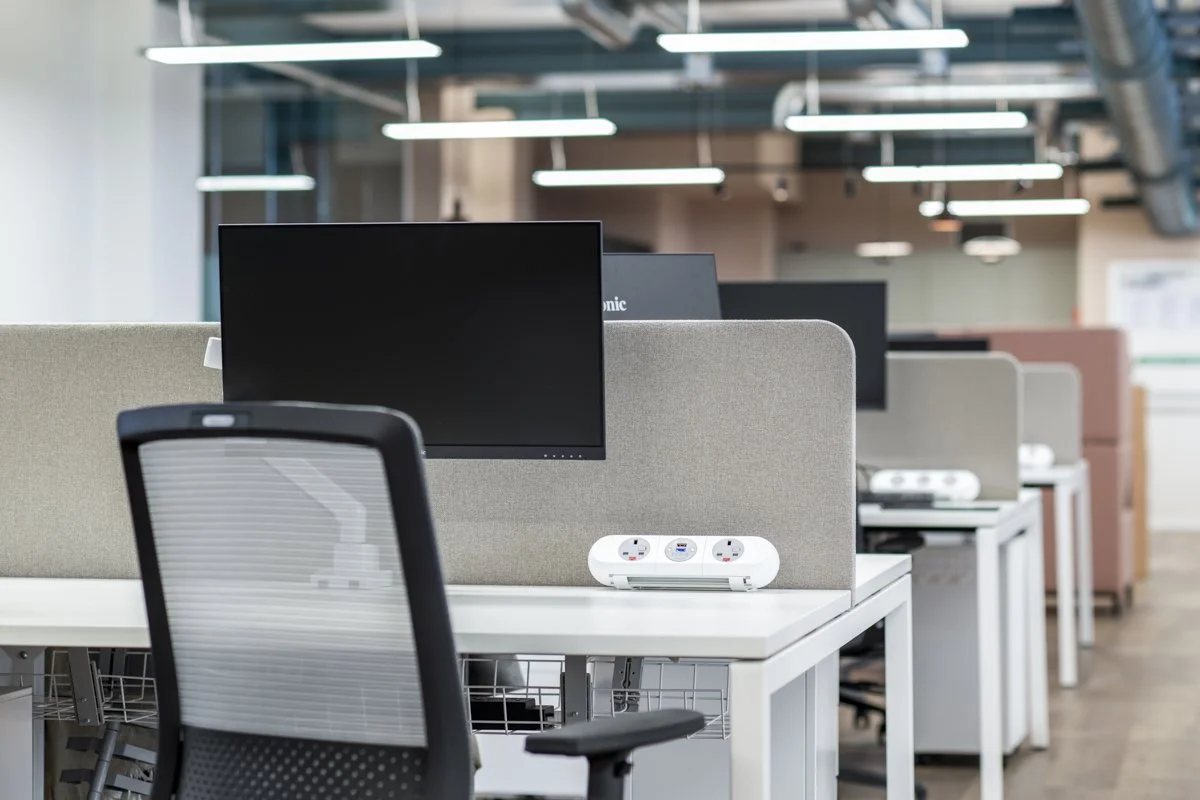
Employee wellness becomes non-negotiable
As the herd mentality continues to draw people back into the office, the most competitive businesses will focus on making workplaces genuinely supportive of wellbeing. Wellness will move beyond token breakout zones and surface-level perks.
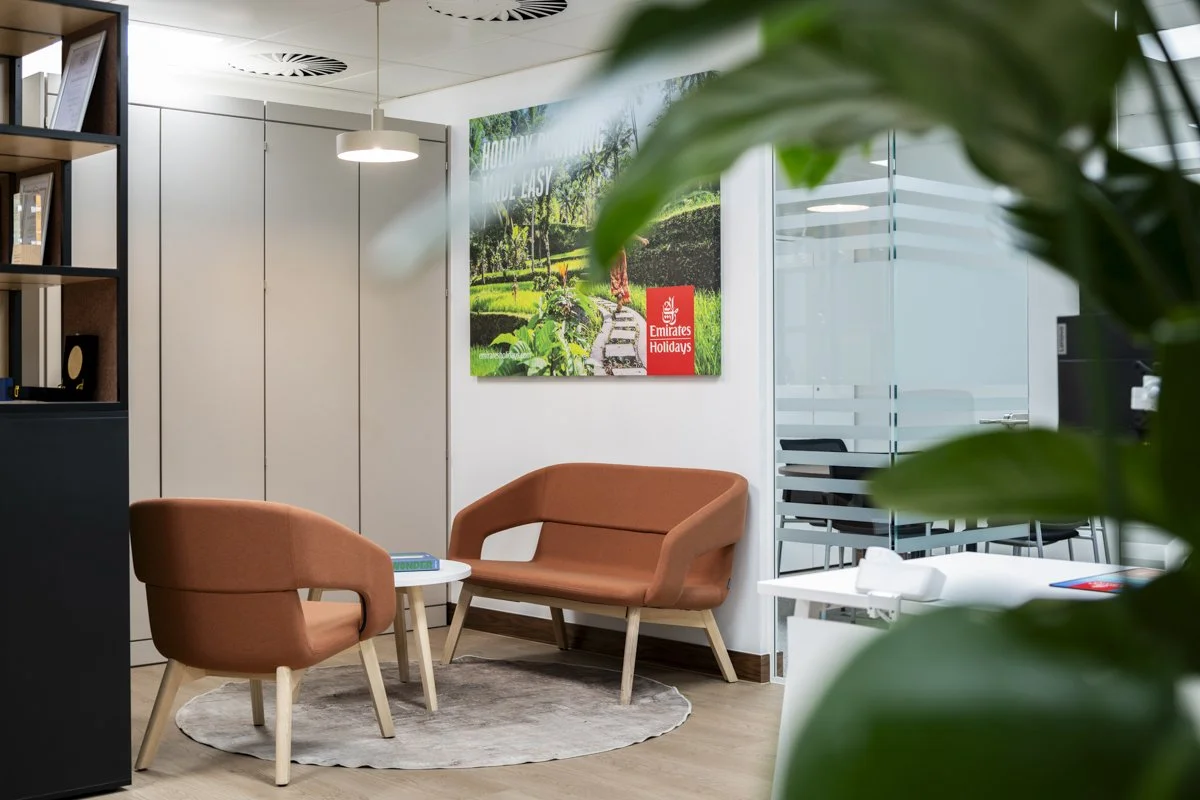
Residential-inspired spaces lead at Emirates Holidays
Rigid corporate interiors will give way to residentially inspired spaces, using softer furnishings, layered lighting, improved acoustics and planting to create calmer, more human environments. The science is telling: better air quality, ventilation and light have a measurable impact on cognitive function.
Breakout areas will be designed for real recovery, with quiet, tech-free spaces and private rooms that allow employees to properly decompress.
The commercial case is clear. Restorative offices reduce burnout, improve focus and support retention, making wellness-led design a tangible business advantage.
Sustainability becomes key to fit-out projects
In 2026, sustainability becomes a core consideration in office fit-out projects, driven by growing corporate responsibility commitments and formal ESG requirements. At the design and construction stage, fit-out decisions directly influence energy performance, material use and long-term operational efficiency. When sustainability is poorly understood or addressed too late, organisations risk higher costs, wasted materials and future compliance issues. Fit-out specialists therefore play a critical role in translating ESG objectives into practical, build-stage outcomes.
Across both large and small offices, energy efficiency and sustainability are set to become non-negotiable elements of workplace design. Integrating sustainability expertise early allows businesses to design more intelligently from the outset, reducing waste, improving building performance and protecting against evolving regulatory standards. Sustainability-led design is no longer framed solely as an ethical choice, it delivers measurable long-term financial value through lower operating costs and future-proofed workplaces.
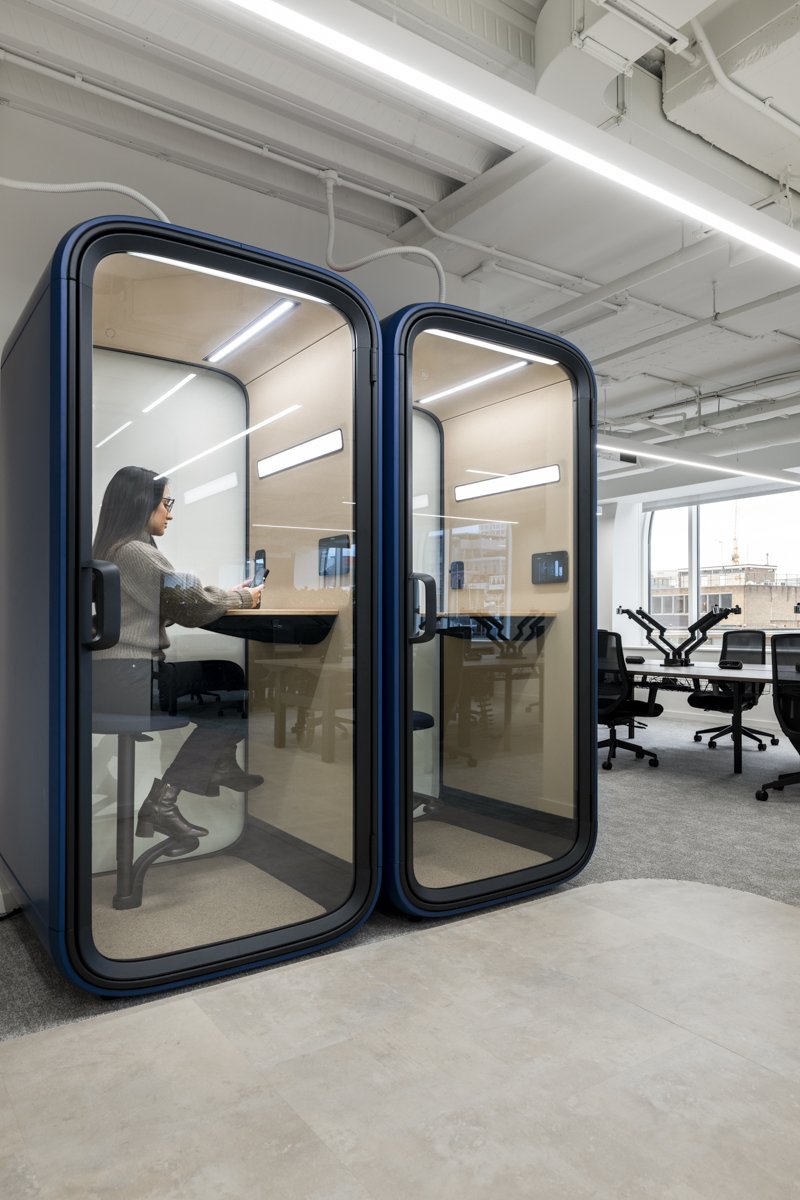
Smart-tech powered booths enable productivity at Weatherbys Bank
Smarter technology for more efficient ways of working
This year, technology will continue to reshape how offices function day to day. As back-to-office, hybrid and multi-location working patterns evolve, demand will grow for pods, booths and personal spaces that support focused work and seamless communication.
Advances in smart lighting and temperature control will also become more widely adopted, with leading businesses using these systems to balance comfort, performance and energy efficiency.
At the same time, plug-and-play working will become the expectation, allowing employees to move between spaces and locations without friction.
The result is a more efficient office that removes barriers to productivity, reduces time lost to technical issues and enables faster decision making and better collaboration.
Fostering a sense of community by way of communal areas
As the role of the office evolves, organisations are becoming clearer about why people come together in person. Beyond collaboration, offices are expected to support connection, culture and belonging.
Communal spaces should act as the social heart of the workplace, encouraging informal interaction and shared experiences. Too often, however, these areas are treated as an afterthought, resulting in generic or uninspiring spaces that go underused.
Looking ahead, office design will prioritise layered communal environments that foster a stronger sense of community and support collective moments beyond day-to-day work. Think designated viewing areas for events such as the upcoming FIFA World Cup, where employees can come together around a shared experience.
Human connection directly influences performance, loyalty and resilience, making it a critical consideration for future-focused workplaces.

The social heart of the Raymond James office at Ropemaker Place
Agile modular furniture design takes centre stage
Socio-cultural change is signalling the end of rigid, corporate office environments. Productivity is no longer supported by static layouts, but by flexible design that allows spaces to adapt to different ways of working. Modular furniture enables teams to move easily between focused work, collaboration and social moments without the office feeling fixed or restrictive.

The kitchen breakout area at Weatherbys Bank doubles up as a Townhall space, complete with agile furniture to accommodate both scenarios.
Many offices still rely on static layouts that limit interaction and reinforce silos. Fixed desks and inflexible meeting rooms reduce opportunities for informal connection and make spaces harder to adapt.
Looking into 2026, modular, multi-purpose spaces will allow offices to evolve without major disruption or cost. These environments can flex to support connection when needed, while reducing the risk of relocation and unnecessary capital expenditure.
In this way, flexibility becomes both a cultural and financial form of future-proofing.
Inclusive design moves from consideration to standard
By 2026, inclusive design will be a baseline expectation. Offices will be designed from the outset to support diverse physical, neurological and cultural needs, rather than retrofitted to meet minimum standards.
Thoughtful zoning, lighting control and acoustic design will better support neurodiverse employees, while prayer rooms, accessible layouts and culturally considered spaces will be fully integrated into office design.
Inclusion is no longer about compliance. It will be considered from day one to ensure design is influenced by real-life experiences of a diverse workforce. Workplaces that support how people actually work will attract broader talent and build more resilient, future-ready organisations.
For businesses, this is not about chasing trends. It is about creating environments that actively contribute to performance, resilience and long-term value. At Cityspace, we see office design as a commercial strategy and the companies that recognise this will be the ones that lead in the years ahead.
Email us at info@cityspacemanagement.co.uk for a commitment-free consultation.

