
WEATHERBYS bANK: A RELOCATION TO FOSTER TEAM COLLABORATION






BACKGROUND
Weatherbys Bank is an award-winning private bank with a 250-year British heritage, serving high-net-worth individuals and horse racing industry professionals. While the head office is in Wellingborough, the bank’s primary London office is on Sackville Street, Mayfair. With rising rental costs in Mayfair and fragmented team communication across the three floors of this office, the decision was made to relocate operational teams to a new, single-floor office to reduce cost inefficiencies and improve team collaboration. One floor of the existing office would be retained for client-facing teams, given its prestigious location alignment with the brand as well as client expectations.
Cityspace was invited to tender for the relocation and fit-out of 77 Shaftesbury Avenue, working alongside project managers, Era.
Location: Shaftesbury Avenue, Soho
Company size: 110 people
Project size: 10,000 sqft
Sector: Banking and Finance
Duration: 8 weeks
PROJECT OVERVIEW
The primary objective was to consolidate operational teams onto one floor to remove communication barriers and facilitate easier collaboration as the team grows.
The brief required a modern, people-first environment that supports interaction and productivity, allows for future growth, and reflects Weatherbys’ heritage. The space was required to accommodate 110 desks, meeting rooms, flexible work settings and an auditorium for townhall gatherings.
CHALLENGES AND EXPECTATIONS
The main challenges arose in accommodating the client’s requirements for desk space, meeting rooms, flexible working areas and the town hall area, within a fixed space, while also leaving room for a planned 20% team growth. To meet these challenges, the Cityspace design team needed to plan the space to work efficiently as possible within these constraints.
With the exposed ceilings and hard finishes of the host building, acoustic treatments were critical to limit noise disruption and maintain confidentiality in meetings, given the nature of the industry.
RECOMMENDATIONS
Spatial Planning
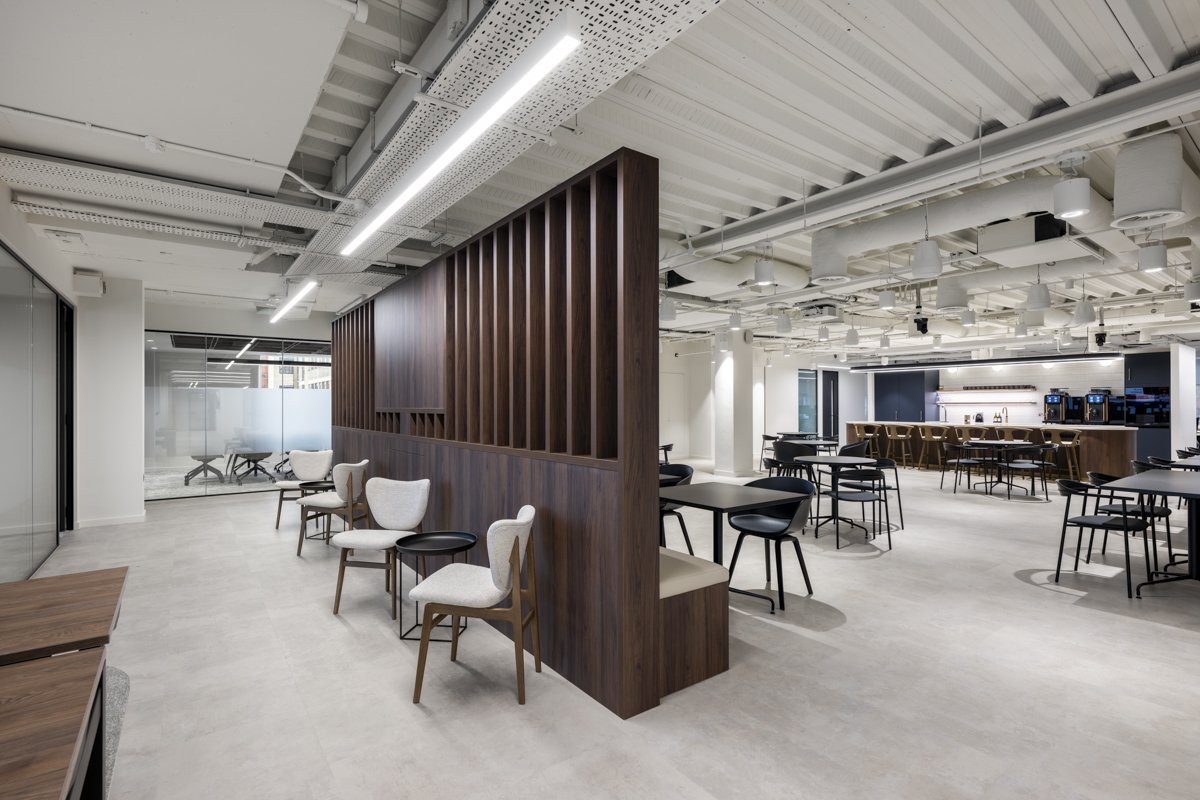
To address the space requirements, the design strategy was centred around adaptability. A large kitchen and breakout area was designed with open plan seating made up of smaller tables, accommodating informal meetings and catch-ups. It was designed with a hidden projector screen that extends in front of the kitchen – and with a quick reconfiguration of the break-out area, the space doubles up into a townhall area for 120 people. With smart design and efficient space planning, this area alone meets the client’s need for staff interaction, as well as a practical townhall space – without the need for a dedicated auditorium.
Acoustic Strategy
With office acoustics being a key focus, our design team, along with our acoustician, selected products and solutions to deliver the privacy desired.
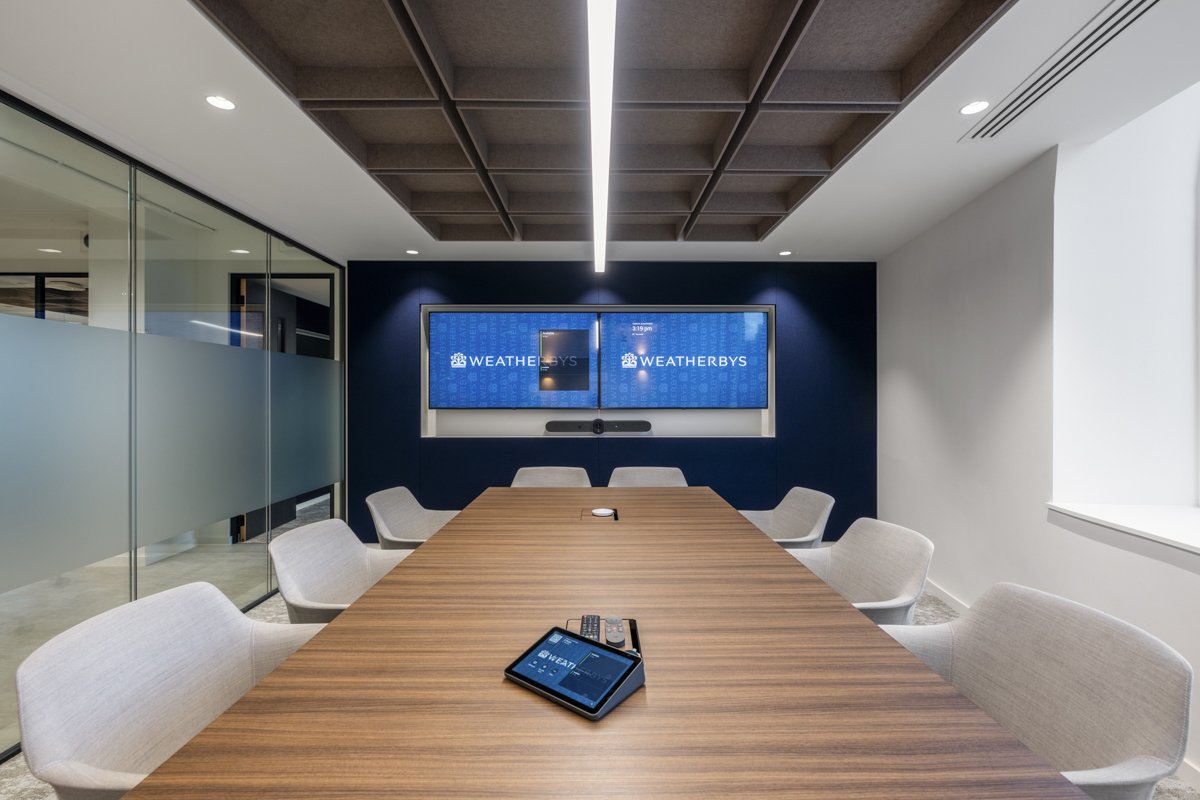
The meeting room ceilings were fitted with innovative, modular sound-absorbing ceiling tiles – a first time use in our projects. Acoustic fabric-wrapped panels were fitted onto the TV walls in the meeting rooms, as well as sound absorbing cushion-backed carpets. Attenuators were also fitted to the air circulation ducts to limit sound travel between meeting rooms and the main office. Dry lining in the building perimeter had previously not been insulated, and so the plasterboard skins were removed and acoustic infills were installed to retain acoustic integrity in the meeting rooms. Double-glazed office fronts with an acoustic glass layer were also installed to further limit sound travel.
People-Centred Design
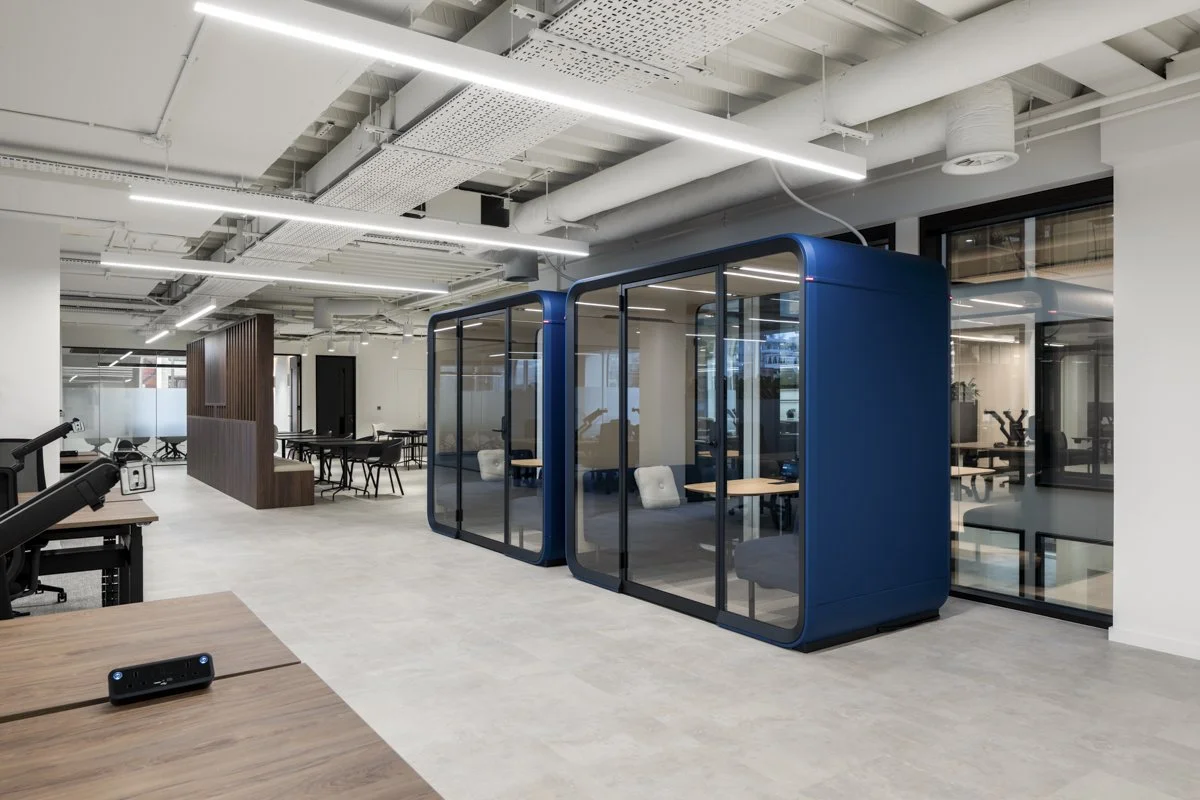
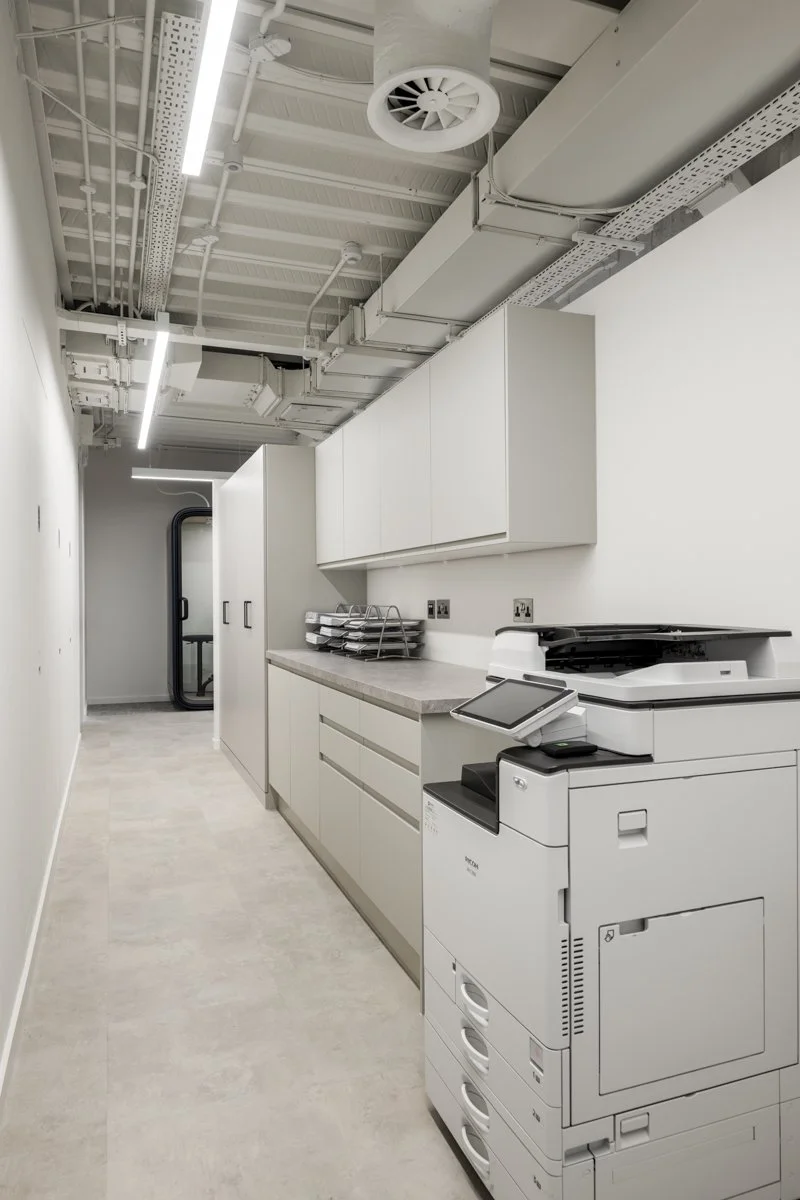
Flexible workspaces were key to the design strategy. To ensure dedicated quiet zones, individual pods were introduced for focused work and confidential calls. Similar, larger pods, accommodating groups of 2-4, were also installed to facilitate collaborative meetings without disrupting the open plan area. Designated reprographics stations were added to the design, allowing for printing and binding away from the central desk area to further limit disruption.
To balance exposed ceilings and harder architectural elements, softer finishes were introduced, including carpets and vinyl flooring, reducing footfall noise while creating a more residential feel. Aligning the interiors with Weatherbys’ corporate identity, we subtly introduced blues, greens and reds from the client colour palette into the fabrics specified.
PROJECT OUTCOMES
With a combination of creative design and careful planning, Weatherbys’ new West End office is both collaborative and functional. The decision to relocate has protected future operational costs, while providing a comfortable workspace for staff and removing barriers to productivity.
Meeting all of the client’s space requirements, the result is a flexible, efficient and future-ready office, designed to accommodate growth.
TESTIMONIAL
“Cityspace delivered an exceptional service throughout the Weatherbys Bank project. From the outset, they managed the entire process with efficiency, clarity and a consistently high level of professionalism. Their quality control was outstanding at every stage of the build, giving both the client and our team complete confidence in the final outcome.
Nothing was ever too much to ask. Cityspace responded to client‑driven changes quickly and without disruption, accommodating adjustments while still maintaining the overall programme — a testament to their proactive approach and strong project leadership.
As a business, Era would not hesitate to work with Cityspace again. Their commitment to excellence, collaborative attitude and reliability made them a standout delivery partner, and we look forward to future opportunities to work together.”
- Alex Bell, Associate Project Manager, Era

